Showing posts with label helen bishop. Show all posts

10.10.2012

Stuck in the Suburbs


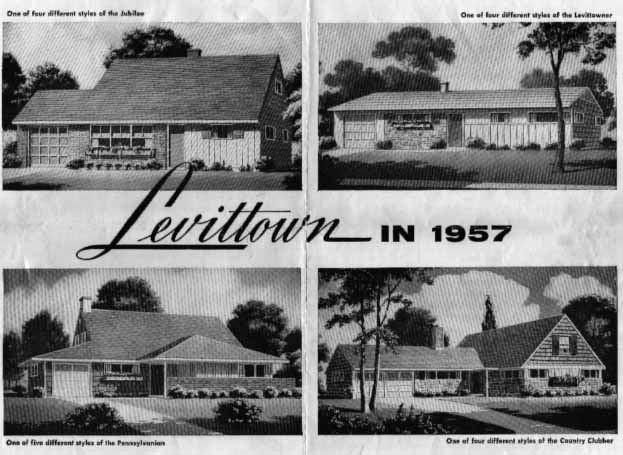
Ah, Suburbia, USA. With picket fences, swing sets, and manicured backyards to boot, suburban communities enticed many Americans following the Second World War and continued to draw families from cities and towns well into the later decades. These neighborhoods were designed to capture the idyllic essence of the American Dream, but for those who chose to pack up the sedan and chase after it, this dream was often, if not immediately, replaced with a chilling reality.

In theory, suburbia was an oasis. The cookie-cutter Dutch colonials and shuttered starter homes combined affordability and spacious accommodation (by comparison,) with the opportunity for land and property ownership. Coupled with assistance from the government through programs like the G.I. Bill, this dream was tangible, and only at a slight cost; you had to leave the cultured, vibrant city behind. But many Americans, seeking a retreat to a simpler, more wholesome time in the wake of the progressive social movements of the day, welcomed this tradeoff with little regret. Thanks to major developments in the Interstate Highway System, newlyweds like Don and Betty quickly adjusted to the classic suburban routine. While the men of the household often held onto aspects of their old lives working in the cities and merely tacking on a relatively short road or rail commute, their brides faced a greater predicament. Out of their element in pop-up communities with sparse surroundings outside of their developments, these women were truly earning the title of housewife. They were slowly, but surely realizing that they were trapped in their own homes, confined to the trophy-wife, domestic lifestyle that many claim already existed. But this time, they had nowhere to go. By definition, the suburb is, “an outlying part.” The wives of suburbia had become the outliers, the outsiders trapped within. Living in a homogenous society, they unknowingly began to sacrifice the cultured, forward-thinking mentality of the city in favor of close-minded, rigidly defined gender roles and limited expectations. 

Image credit: http://www.capitalcentury.com/levittown.jpg

In picturesque Ossining, sheltered women like Betty and Francine are, at least initially, blissfully unaware of their entrapment. It takes an infusion of liberal, revolutionary thinking on Helen Bishop’s part to awaken the independent, ambitious spirits of the housewives, or at least within one of them. Helen’s seemingly aimless walks may have served another purpose all together- an attempt to break free from the confinements of suburbia.

The suburban USA encased many women beneath a glass ceiling, often unbeknownst to them. But as with most lifestyles, these women adjusted to it, acclimated themselves, and raised their children with this mentality.  A few exceptions surfaced, though, offering a glimmer of hope on the otherwise gray cement driveways of the ‘burbs. Women like Helen, and later Betty, proved to this new society that women could continue to lead cultured, well-rounded, educated lives outside of the city just as well as the men they lived with, and even without them. Gender roles were being rewritten, even in light of the hiccup in feminism produced by suburbanization in the United States. 

Links Referenced:

Freeman, Tyson. "The 1950s: Post-war America Hitches Up and Heads for the 'Burbs." National Real
     Estate Investor. N.p., 30 Sept. 1999. Web. 9 Oct. 2012.
     real_estate_postwar_america_hitches/>.

"The 1950s." History Channel. N.p., n.d. Web. 9 Oct. 2012.
     1950s>.


3.21.2011

Suburban Housewives

In Mad Men’s first season there is no doubt that Betty Draper is one of the main characters; however her daily life is mostly left up to the viewer's imagination. Besides the moments when something important to the plot is happening at the Drapers' house, Betty’s role as a ‘housewife’ is seldom shown. While the plot of the first season does not focus solely on Betty’s activities as a housewife, the viewer becomes keenly aware of her function through subtle cues. For example Betty is always dressed impeccably and keeps a good face no matter how bad the situation is; food is always ready for Don when he gets home, and in another 1960’s stereotype Betty drinks heavily. There are several poignant moments throughout the season where I found it interesting to contrast Mad Men’s perception of housewives in the 60’s to the perception of housewives today.


Image credit: http://www.vintagelingerieblog.com/vintage-lingerie/how-does-betty-drapers-dress-flare-out

In one of the greatest examples of Mad Men's dry, subtle humor, Betty and her fellow housewives grill Helen Bishop on why she would walk aimlessly around the neighborhood. Helen responds that she does it because it clears the mind and its good exercise - which leaves the housewives stunned. The interaction is one of many which demonstrates that the perception of women in the 60’s, even of themselves, was that their place was in the home; Betty is never shown shopping (besides for groceries), eating lunch or being out of the house with any of her friends. In today’s culture, housewives are perceived as being constantly out of the household. In fact one of the main stereotypes of an affluent housewife today is the exact opposite - that she is rarely actually at the house. Perfect housewives are more often showcased in pop culture as constantly ‘doing lunch,' shopping and gossiping with their fellow housewives. As the perception of a woman’s place has changed, one of the only factors that has remained consistent in pop culture is a housewife’s love of gossip. Betty and her female neighbors take pleasure in constantly gossiping about Helen Bishop and tearing her down. The central plotlines of many shows, like Bravo’s Real Housewives franchise and sitcoms such as Desperate Housewives and the 80’s Dynasty, revolve around gossiping housewives.


Image credit: http://missericasblog.blogspot.com/2010/08/my-recent-guilty-pleasure.html

As I was watching the portrayal of Betty throughout the entire season and the portrayal of suburban life in general in the 1960’s, there was one massive difference to today’s culture that stood out to me. In today’s suburbia, the “American Dream” is no longer to have a white picket fence in a perfectly manicured lawn, with an apple pie in the window of a Colonial style house with central hallway and four bedrooms. The “Dream” has completely shifted to one that has created the material culture today. It is perceived today that the ideal of every housewife is to own an SUV which you can park outside your McMansion and occasionally drive to the necessary Botox or ‘glass of wine’ sessions with your girlfriends - all while the nanny’s watch your kids of course. Upon my realization that the perception and culture of Housewives has changed so drastically, all I could do was ask myself: Why?

And then I suddenly understood it all. In The Feminine Mystique the author Betty Friedan describes what she calls “the problem with no name." Basically, Friedan suggests that housewives in the 1960’s had a lingering dissatisfaction with their lives as creatures of the home, and they constantly wondered if it was all their was to life. Many believe that the problem has gone away become of changing gender roles and equality in the workplace. The rise of women leaders and business people however has not stopped the existence of housewives. Today’s housewives bury their ‘problem with no name’ under piles of credit card bills, tummy tucks and the word ‘cougar’- but it still exists; the same problem forces them to pressure their husbands into having American Express Black Cards and 10,000 square foot homes. So basically if you’re still looking for someone to blame that pesky little recession on don’t take it out on Freddie Mac or Fannie Mae, blame it on Claire Wellington from down the street.

3.07.2010

The New Girl on the Block

In almost every episode of Mad Men, artistic elements are used in order to support and enhance each scene: elements such as lighting, music, and nuances in the text. Many of these elements are present in two short, continuous scenes in the episode, “New Amsterdam”, directed by Alan Taylor and written by Matthew Weiner. Taylor, along with the rest of the Mad Men creative team, used artistic elements in order to further characterize the new woman on the block: Helen Bishop.
In this episode, there is a scene in which Betty witnesses an uncomfortable interaction between Helen Bishop and her ex-husband, Dan. The first shot reveals Betty walking the dog, after putting the kids to sleep. As she approaches Helen’s house, we see Dan pounding on the door, wanting to be let in. He sees Betty and asks to use her phone, but she refuses him.

This whole sequence is interesting because of how Taylor decided to shift the mood from pleasant to gloomy. When Betty is simply walking her dog, nothing seems to be wrong. But the moment we hear pounding on Helen’s door, dark and sinister music begins to play. The lighting becomes a bit darker, and we realize it’s about to be nighttime. The director had a reason for wanting a darker mood to surface the moment Betty reaches Helen’s home.

The next shot shows Betty’s feet (in slippers) walking down the stairs to answer the door, clearly on the same night. When she opens the door, we hear, “Can I come in?” but we cannot see a face. Again, there is a feeling of mystery and suspicion because we hear a noise but do not see who is speaking until Betty opens the door…and Helen walks into the house.

The following conversation is emblematic of the show’s theme of people covering up their true feelings in order to seem polite or even just to seem happy. Whereas the earlier shots in front of Helen’s house are rich in artistic elements (music, lighting, etc.), this scene in Betty’s house is rich in text. Helen starts off by apologizing for Dan’s rude behavior and reveals how embarrassed she is about the whole thing. Helen’s admittance of her embarrassment startles Betty, forcing Betty to instantly reply, “I don’t know what you’re talking about," even though she is clearly aware of the situation.

As the scene continues, Helen shares a bit too much information for Betty to handle, stating the reason she left Dan; he was cheating on her with women in Manhattan. Weiner is clearly poking fun at the viewer in this conversation, because we all know that Don Draper is doing the exact same thing. It is no coincidence that “Dan” and “Don” would be the same name if not for one letter. Helen states the truth about something that Betty cannot bare to discuss or even think about, for obvious reasons.

Through the mysterious tone of the first scene, and the awkward interaction in the second scene, Taylor and Weiner create a foil by strongly differentiating the characters of Betty and Helen; one is polite and refined, while the other is blunt and able to express her true feelings. The mysterious lighting and music of the previous scene foreshadowed the dark topic of the ladies’ conversation about affairs and divorces. This just goes to show how every detail in Mad Men is planned and constructed for a reason- every detail goes towards telling a more clear and dynamic story.

The above image is posted at http://woodscolt.wordpress.com/2009/09.

3.04.2010

Feeling Trapped

A very memorable scene from the earlier part of the series was the birthday party scene from the third episode entitled "The Marriage of Figaro." In this scene we really got to see the dynamics of suburban life. Rather than experiencing a sense of community, like one would expect from a birthday party scene, the viewer feels trapped like the characters in the scene. Most of this is can be attested to the crowded, claustrophobic sense created by the way the scene was filmed. In contrast the characters that are the most trapped are the ones we see by themselves. We can see, from the way the scene is framed, that Betty, Don, and Helen feel trapped by suburban life.

The viewer only sees Betty Draper alone for about thirty seconds in the beginning of the scene. We see her making a punch for the adults. Instead of pouring a moderate amount of alcohol in to the cocktail, she dumps an extreme amount in to the pitcher. She then sighs and picks up the drink. We next see her in a sea of neighbors and friends with a happy smiling face serving drinks to the guests. It then becomes obvious throughout the remainder of the scene that her main concern is being a proper housewife and making sure everything is perfect.

After a few minutes, Helen Bishop enters the scene with her son Glen. Up to this point we know that Helen had recently hit a rough patch and gone through a divorce. The scene becomes interesting when the women are talking about their honeymoons and marriages in the kitchen. Helen displays herself as a strong woman as tensions rise within the conversation. The camera begins to switch between three extremely tight shots at lightning speed. Unlike the other characters, Helen Bishop has found her escape. She is asked about walking an she explains that she does it just to clear her mind. She shows strength through her ability to cope with stress and difficult situations. The other women don’t accept this and they put it off as her being divorced and deranged.

Finally, there is Don. We see Don taking home movies. There are three shots that we see from the first person perspective. We first see the kids running around. Then, we are taken to a shot of Helen and one of the men having a very intense and semi argumentative conversation. We end by seeing a couple sharing a kiss. These three shots represent three different aspect of Don’s life. There are the kids, who is will always make him happy no matter what. Then the other two shots represent the two options he has with his wife. He can either be bicker-some and put on the facade of being happy, or he can be loving and caring towards her. Pressured by this Don attempts to escape to the backyard where the children are playing house and bickering like their parents, a subtle reminder of the life he doesn’t want to lead.

Helen then joins Don outside, and they mention how the crowd of adults inside the house is the same as the crowd of children outside the house. Inside the kitchen the women are still discussing how they don’t approve of Helen’s lifestyle. It is brought to Betty’s attention that Don is outside conversing with Helen. Immediately, Betty goes and removes Don by telling him to go get the cake. Don does so and the scene ends with Don finally finding his escape by driving off, disappearing. Where he goes we don’t exactly know.

By the end of the scene that two of the characters have found a way of dealing with their sense of entrapment. Don has his escape of getting away and leaving the house for extended periods of time. Helen has her walking. Betty doesn’t have something like this. As the series progresses it is almost a sure thing that she will try to find an escape. This will likely be one of her greatest struggles. When she succeeds, it will be one of her greatest accomplishments. For now, we leave that in the hands of the writers.