Showing posts with label lucky strike. Show all posts

10.17.2010


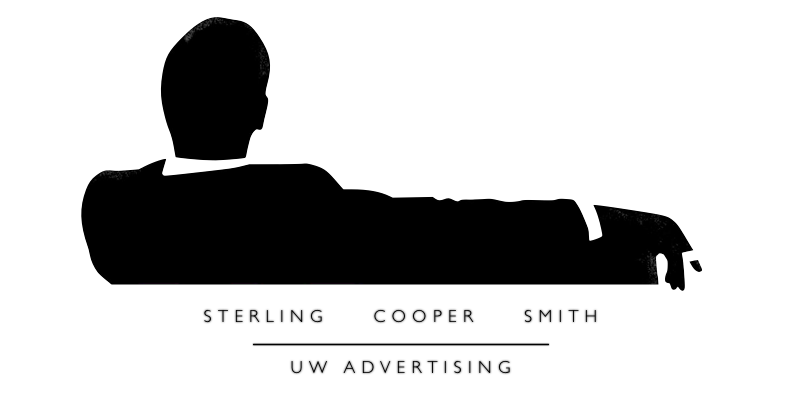
AMC's Mad Men is based around many different issues; relationships, historical events and tensions in the 1960s, and mystery about characters among others. However, regardless of what is going on in the always intriguing and scandalous lives of its employees, Sterling Cooper is an ad agency. In many scenes we see Don, Peggy, and other characters working on copy and giving presentations on advertising strategies for various clients. What always strikes me while watching the show is the fact that many of the ads look like they could be in a magazine or on a billboard today. The elegance and modern aesthetics of ads on the show like those made for Bethlehem Steel and Liberty Capitol "Executive Account" often make me wonder how accurate these ads really are to the 1960 setting of a show made today when I think of the cartoonish ads of the 60s with paragraphs and paragraphs of fine print.

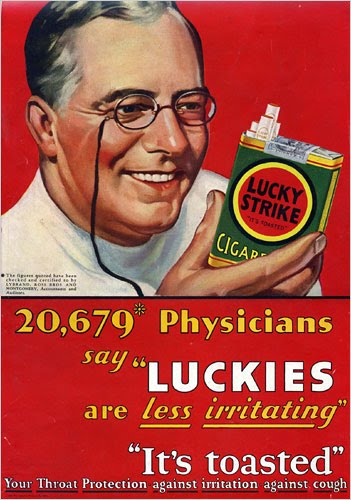
However, Lucky Strike, a real life cigarette company and fictional client of Sterling Cooper, is an example of when the creators of Mad Men get it right. The show depicts quite a few real-life situations that come up in Sterling Cooper and Don's ideas for Lucky Strike's advertising, obviously twisted to make them fit the show. For example, in the first episode and subsequently there is controversy on the show surrounding the FDA and claims it allows cigarette companies to make about the health of their cigarettes. In reality, Lucky Strike did put out ads depicting doctors which claimed that their cigarettes were healthier than others. This practice is obviously no longer allowed. Another real-life example from Lucky Strike's advertising is the slogan "It's toasted." On Mad Men, Don comes up with this brilliant idea on the spur of the moment in a meeting. In reality, this slogan had been in place at Lucky Strike since 1917; however, the slogan still remains the same. 

While the same accuracy and attention to detail cannot be this exact for all of the advertisements on the show, it is clear that the writers of Mad Men are paying attention to what really happened in the 1960s. The other clients on the show, such as Ponds, Bethlehem Steel, and Kodak are real companies, giving the writers of the show examples and measures for accuracy of advertising in the 1960s. Although not every ad can have such extensive history behind it, many things on the show are based on real events and people and ring true for the 1960s.

Image credits: From The New York Times Website
Links referenced: "Lucky Strike"

10.12.2010

From the first episode of Mad Men to the current fourth season, Lucky Strike cigarettes have been the primary account for Sterling Cooper Draper Pryce (formerly Sterling Cooper). However, the agency and their old friend finally parted ways this past week as part of a series of losses that has led SCDP on the verge of collapse. In a daring attempt to spin this troublesome news, Don Draper decides to write an open letter to the public saying that the agency will no longing take on cigarettes accounts due to their danger to people’s health. Of course, this is Don’s attempt to spin bad news and not a sudden emergence of ethical standards.

Ironically, the real life Lucky Strike brand underwent its own endeavors with the delicate art of spin. During the 1940s, Lucky Strike claimed in their ad campaigns to have “gone to war” alongside Americans. Their signature green packaging was replaced with white, and sales increased by 40 percent. Part of this was the result of a claim by the parent company, American Tobacco, that they had changed the pack because they wanted to save the copper used in the green paint that went onto the packages for the war effort. However, this patriotic act was not altogether true. While the gold trim of the packaging was indeed made with copper-based paint, the substantially larger green portion was made from chromium. The real reason behind the change in colors was studies (perhaps conducted by men not so different from Don and Pete Campbell) that showed that women, a growing demographic of the smoking population, disapproved of the drab, green color.

Pretty sneaky, no? Then again, these are the people who have successfully peddled what have been known colloquially for over a half century as “caner sticks”.

Links referenced: "Lucky Strike." Wikipedia. Wikipedia, 5 Oct 2010. Web. 11 Oct 2010.

2.16.2010

Toasted


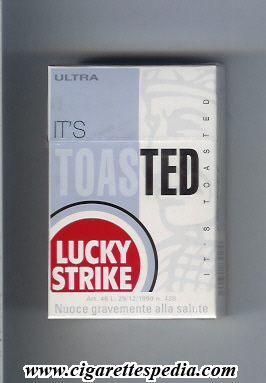
We first meet Don in a restaurant, questioning a man about his brand of cigarettes. We are introduced to his intriguing personality and wit when he tries to convince the man to switch to Lucky Strikes. This brand of cigarettes was prominent in this time period and was first introduced in the early 1900s. Consistent with Mad Men, the slogan "It's Toasted" was a real campaign run to advertise how their cigarettes were made better than others. Like this strategy, Lucky Strike used various methods in an attempt to dominate the tobacco industry such as changing its design from green to white, using both images and radio to reach the public, and broadcasting testimonials. Mad Men gives us a look into the brains and ideas behind some of these campaigns and the process that goes into selling what is considered a "dangerous" product. Today unfiltered Lucky Strike cigarettes are still sold in the United States.

The ad image above appears at the following link: Adclassix.com. For another Lucky Strike advertisement, see this link at Cigarettespedia.